

From India, America & Nepal to IDD
Three Constitutional Studies. One Larger Question.
On this page
- Three Studies, One Question
- India
- America
- Nepal
- The Convergence
- Who investigates the investigators?
- From Three Studies to an Integrated Framework
- Why "Integrated"?
- Why "Dharmic"?
- The Comparative Method
- The Three Books
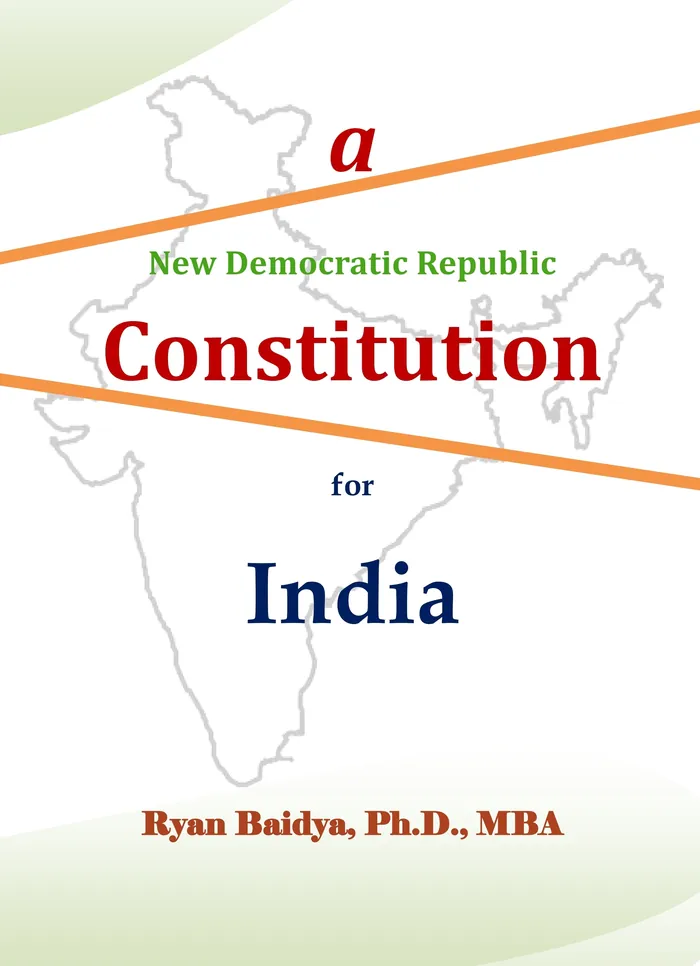
- India
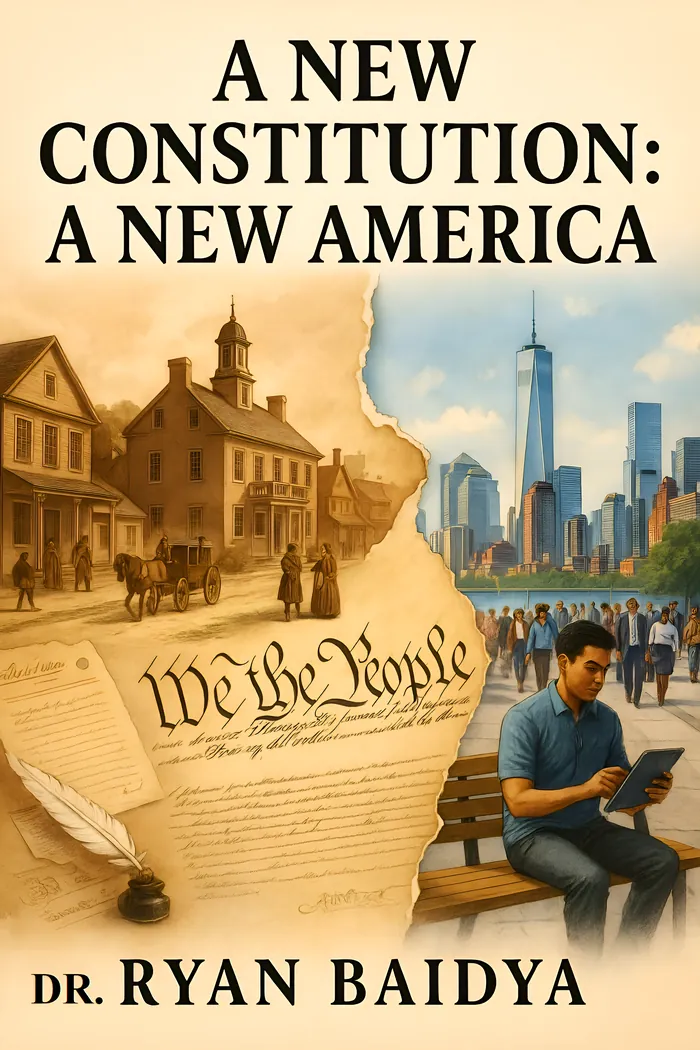
- America
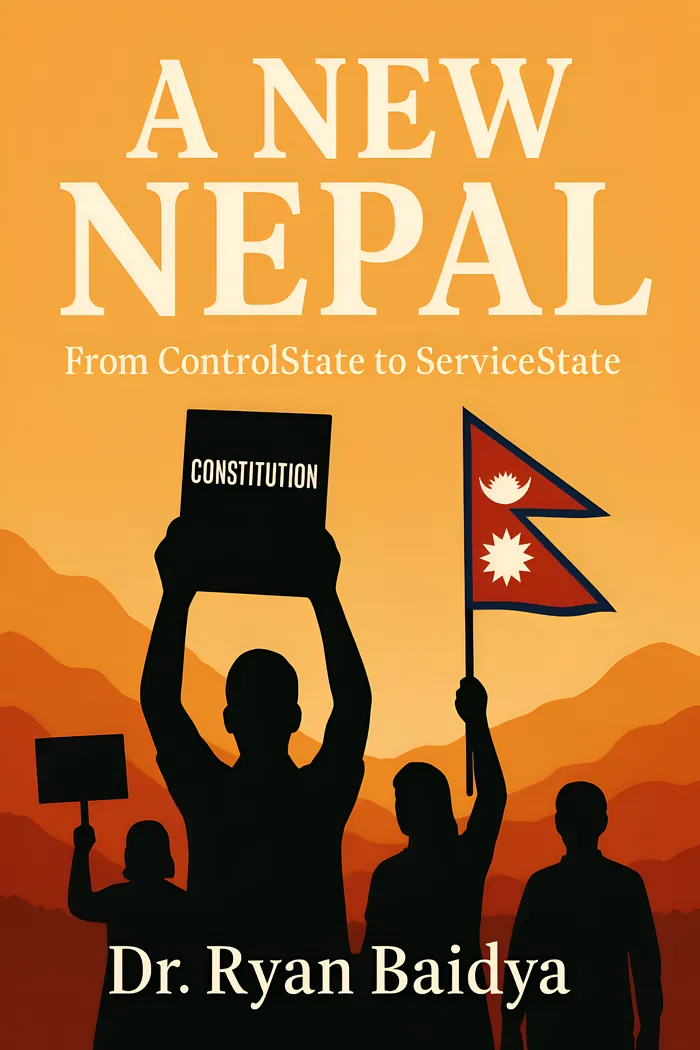
- Nepal
- The Fourth Stage
- From Comparative Study to Generational Blueprint
- A Continuing Inquiry
- Explore Further
Three Constitutional Studies. One Larger Question.
Integrated Dharmic Democracy did not begin as an attempt to create a universal constitutional framework.
It emerged gradually from three separate constitutional studies—of India, the United States of America, and Nepal.
Each study began with the particular history, institutions, constitutional arrangements, and democratic challenges of one nation.
Yet as the work progressed, recurring questions began to appear.
Why do democratic institutions gradually become distant from the citizens who created them?
Why do constitutional systems sometimes protect institutions more effectively than they protect the sovereignty of the people?
Why can elections change governments while leaving deeper structural problems largely untouched?
Why are institutions expected to police themselves?
Why can constitutional systems remain largely unchanged even after society, technology, economics, communication, and the nature of governmental power have transformed?
And perhaps most importantly:
How can democracy acquire the capacity to examine and renew itself before institutional failure becomes a national crisis?
The search for answers led from three national constitutional studies toward a broader constitutional architecture.
That architecture became Integrated Dharmic Democracy—IDD.
Different experiences. Shared lessons. A broader vision.
India
From Decolonization to Constitutional Reconstruction
The India study began with a fundamental examination of the relationship between political independence and constitutional independence.
India achieved independence from British administration, but many institutions, laws, administrative practices, political structures, and conceptions of state authority continued to reflect systems developed under colonial governance.
The constitutional inquiry therefore moved beyond the question of amendment.
It asked whether a post-colonial democracy should periodically reconsider the deeper architecture it inherited.
The study explored questions including:
- citizen sovereignty;
- constitutional legitimacy;
- electoral accountability;
- the relationship between citizen and state;
- judicial reform;
- policing and public accountability;
- corruption and independent oversight;
- constitutional recognition of civilizational history;
- property rights;
- political responsibility; and
- periodic constitutional renewal.
The India study increasingly pointed toward a central proposition:
Political independence does not necessarily complete the process of constitutional self-determination.
A people must remain capable of examining whether the institutions under which they live genuinely reflect their own democratic aspirations.
That inquiry became one of the foundations of IDD.
America
When Constitutional Stability Becomes Constitutional Rigidity
The American constitutional study approached the problem from a very different starting point.
The United States possesses one of the world's longest continuously operating written constitutional systems.
That longevity demonstrates the value of constitutional stability.
But it also raises another question:
Can constitutional durability eventually become constitutional rigidity?
Institutions designed in one historical period may continue operating centuries later under conditions their designers could not have anticipated.
Population changes.
Technology changes.
The economy changes.
Methods of communication change.
The scale and capability of government change.
The relationship between citizens, political institutions, corporations, media, and information changes.
Yet fundamental constitutional structures may remain largely fixed.
The American inquiry therefore examined whether constitutional democracy should contain a mechanism through which future generations can periodically evaluate the entire constitutional arrangement rather than depend exclusively upon incremental amendment.
It also examined questions involving:
- electoral legitimacy;
- representation;
- institutional accountability;
- judicial tenure and independence;
- concentration of political power;
- constitutional checks and balances;
- citizen participation; and
- generational constitutional review.
The American study reinforced an idea that would become central to IDD:
A Constitution should provide stability without denying future generations the right to reconsider the system they inherit.
Nepal
From ControlState to ServiceState
The Nepal study presented another constitutional environment.
Nepal's modern political history demonstrated how rapidly constitutional systems can change while deeper patterns of governmental behavior may persist.
The inquiry therefore concentrated increasingly on the relationship between the citizen and the state.
Does government exist primarily to control, regulate, command, and manage citizens?
Or does it exist as a constitutional instrument created by citizens to serve legitimate public purposes?
This distinction developed into the concepts of the ControlState and the ServiceState.
A ControlState gradually places the institution above the citizen.
A ServiceState recognizes that public authority is delegated authority.
That distinction influenced a much larger part of the eventual IDD framework.
The Nepal study also examined:
- constitutional transition;
- institutional integrity;
- judicial reform;
- public accountability;
- corruption prevention;
- fiscal discipline;
- citizen access to justice;
- civilizational identity;
- state responsibility; and
- constitutional mechanisms capable of surviving political transition.
The central lesson extended well beyond Nepal:
Changing a Constitution does not automatically change the relationship between the citizen and the state.
Institutional design must make that relationship explicit.
The Convergence
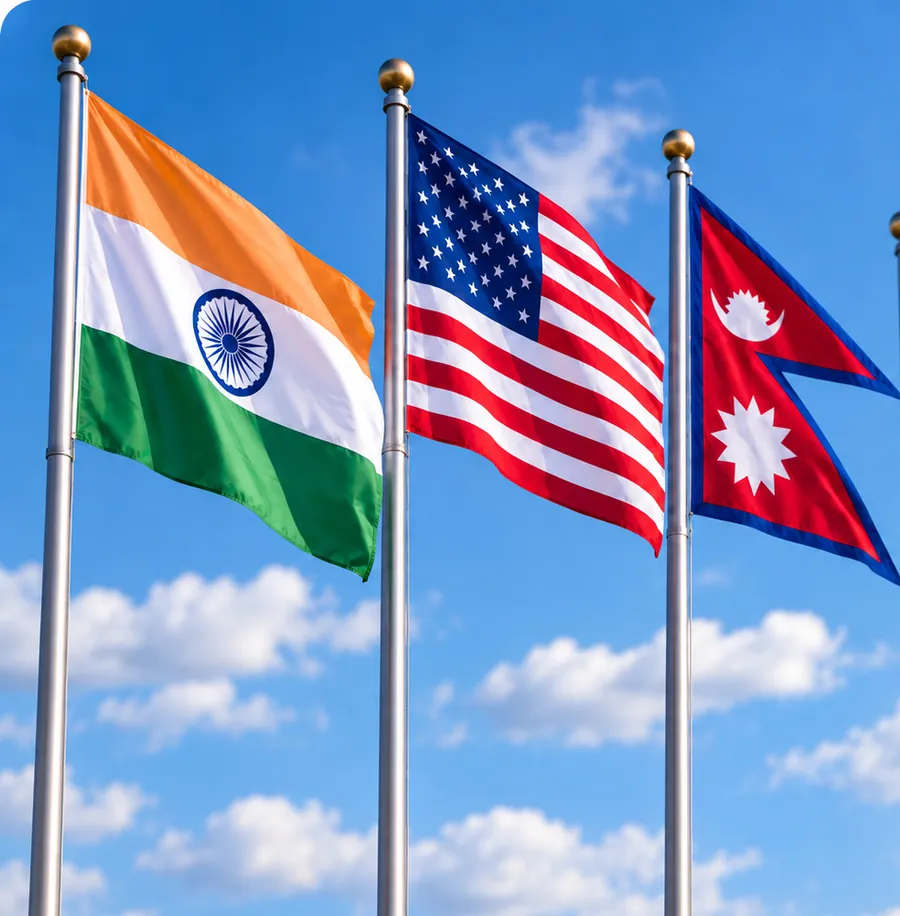
India, America, and Nepal presented very different constitutional circumstances.
India raised questions of post-colonial constitutional inheritance and civilizational continuity.
America raised questions about constitutional longevity, institutional rigidity, and generational authority.
Nepal raised questions about repeated political transition, institutional instability, and the deeper relationship between state power and citizen sovereignty.
Yet the studies began to converge.
The same structural questions repeatedly appeared:
Who is ultimately sovereign?
How much authority should one generation be permitted to impose upon the next?
How can institutions remain independent without becoming unaccountable?
Who investigates the investigators?
How can electoral legitimacy be strengthened?
How should citizens hold institutions accountable between elections?
How can constitutional systems protect both liberty and responsibility?
How can historical and civilizational continuity coexist with equal citizenship?
How can public integrity be built into the architecture of government rather than treated merely as an administrative objective?
These were no longer questions belonging exclusively to India, America, or Nepal.
They were questions about democratic constitutional design itself.
From Three Studies to an Integrated Framework
The three constitutional studies gradually suggested that reforming individual institutions might not be sufficient.
If elections, courts, administration, policing, education, public finance, integrity, citizen rights, and constitutional renewal influence one another, they cannot be designed entirely in isolation.
This led to the idea of an integrated constitutional architecture.
The question changed.
It was no longer simply:
How should India reform its Constitution?
or:
How should America modernize its constitutional system?
or:
How should Nepal construct a durable democratic state?
The broader question became:
What institutional principles might help constitutional democracy remain legitimate, accountable, adaptable, and citizen-centered across different national environments and across generations?
That question became the foundation of Integrated Dharmic Democracy.
Why "Integrated"?
The comparative studies demonstrated that constitutional weaknesses rarely remain confined to one institution.
Weak electoral accountability affects legislatures.
Weak legislatures affect executive power.
Executive concentration affects administration.
Administrative capture affects policing.
Weak policing oversight affects justice.
Judicial weakness or insulation affects accountability.
Educational failure affects civic understanding.
Weak civic understanding affects elections.
Fiscal opacity affects future generations.
Institutional corruption can spread across all of them.
IDD therefore treats constitutional democracy as an ecosystem.
Its institutions must be examined not only individually but also through their relationships with one another.
Why "Dharmic"?
The three studies also pointed toward a problem that institutional engineering alone could not solve.
A constitutional system may establish authority.
But what restrains the exercise of that authority?
Law provides one answer.
Institutional checks provide another.
IDD introduces Dharma as an additional constitutional principle—not as a requirement of religious adherence, but as a conception of duty, responsibility, truthfulness, restraint, justice, and the ethical use of power.
Public office creates responsibility.
Institutional independence creates responsibility.
Citizenship creates responsibility.
Power itself creates responsibility.
In this sense, the Dharmic dimension of IDD asks not only whether authority is legally available, but whether its exercise remains consistent with the responsibilities attached to it.
The Comparative Method
IDD does not assume that one nation's constitutional experience should simply be copied by another.
Every constitutional system develops within a particular history.
Different nations possess different legal traditions, social structures, demographic conditions, administrative capabilities, political experiences, and civilizational inheritances.
Comparative constitutional study is therefore most useful when it identifies principles, mechanisms, failures, and possibilities rather than producing constitutional imitation.
The India, America, and Nepal studies served precisely that purpose.
Each provided a different constitutional laboratory.
The aim was not to determine which system was superior.
The aim was to learn what each experience revealed about democratic governance.
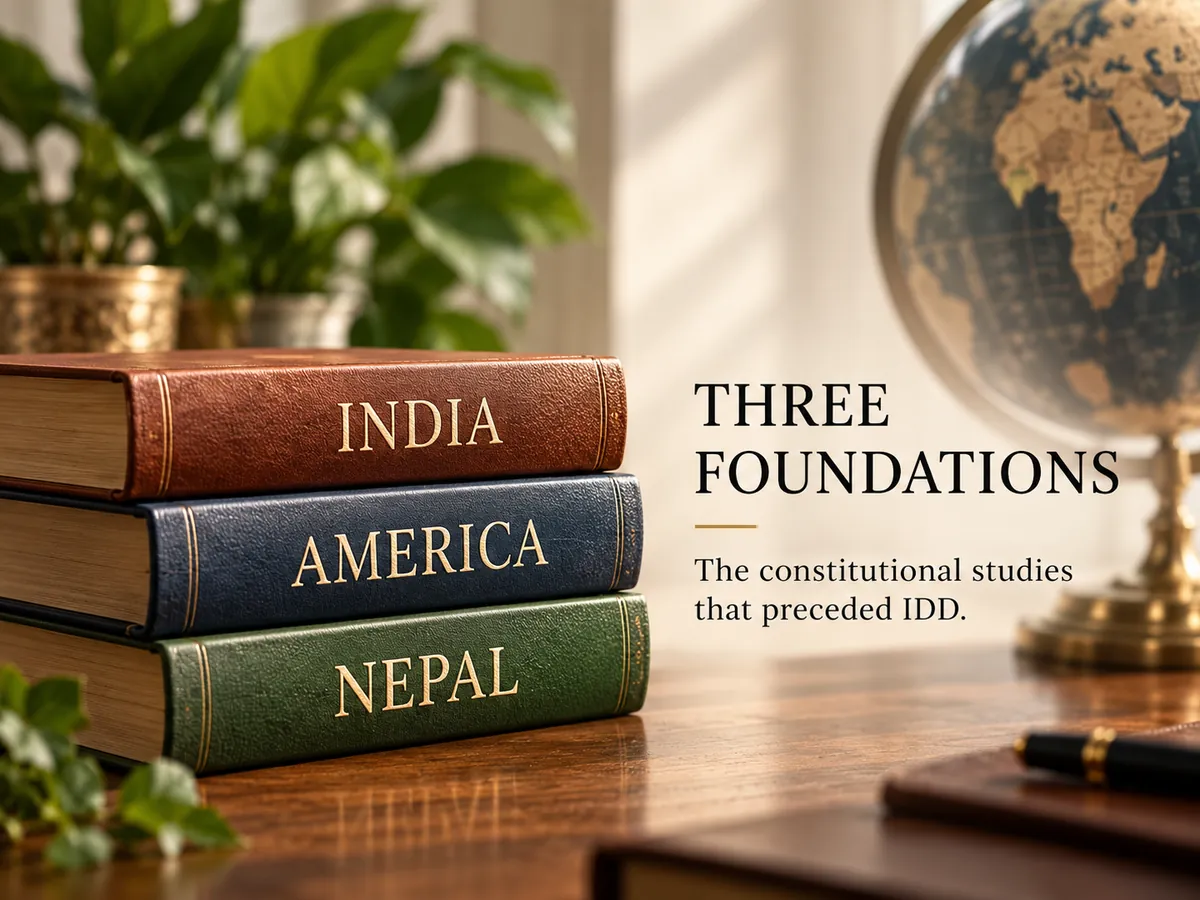
The Three Books
The intellectual path toward IDD can be followed through three earlier constitutional studies:
India
A New Democratic Republic Constitution for India
An examination of constitutional reconstruction, citizen sovereignty, institutional accountability, decolonization, civilizational continuity, and democratic renewal.
America
A New Constitution: A New America
An examination of constitutional longevity, institutional reform, democratic legitimacy, generational constitutional authority, and mechanisms for comprehensive constitutional review.
Nepal
A New Nepal: From ControlState to ServiceState
An examination of constitutional transition, citizen–state relations, institutional integrity, democratic accountability, and the transition from governmental control toward citizen-centered public service.
These works were developed independently.
In retrospect, however, they can also be read as three stages of a larger inquiry.
The Fourth Stage
Integrated Dharmic Democracy represents the fourth stage of that constitutional journey.
The earlier books asked how particular nations might reform themselves.
IDD asks whether some of the lessons drawn from those studies can be developed into a more general constitutional framework.
It therefore moves from national constitutional reform toward constitutional systems design.
The objective is not to produce a Constitution for the world.
Nor is it to erase national differences.
The objective is to identify a constitutional architecture that can be examined, challenged, adapted, and—where citizens choose—used as a foundation for democratic renewal.
From Comparative Study to Generational Blueprint
The progression may be expressed simply:
India asked whether political independence had completed constitutional independence.
America asked whether constitutional permanence could eventually restrict generational democratic authority.
Nepal asked whether changing political systems could truly transform the relationship between citizen and state.
IDD asks how these and other lessons can be integrated into a constitutional system capable of correcting and renewing itself.
That is why Integrated Dharmic Democracy is described as a:
Generational Blueprint of a Constitutional Democratic Governance.
It is not the conclusion of the earlier studies.
It is their convergence.
A Continuing Inquiry
The development from India, America, and Nepal to IDD also illustrates an important principle of the project itself.
Constitutional thought should remain open.
Ideas developed for one problem may reveal another.
Institutional proposals may require revision.
Comparative experience may expose weaknesses that theory alone does not reveal.
New generations may develop better solutions.
IDD therefore does not treat its own development as complete.
The same principle it applies to constitutions applies to constitutional thought:
Preserve what works.
Correct what fails.
Learn from experience.
Remain open to renewal.
Explore Further
The Three Constitutional Studies
Learn more about the India, America, and Nepal books that preceded IDD.
ExploreWhat Is IDD?
Read a concise introduction to Integrated Dharmic Democracy.
ExploreThe IDD Framework
Explore the principal components of the constitutional architecture.
ExploreDigital Supplements
Access the working constitutional instruments and supporting documents accompanying the two-volume work.
ExploreThe Book
Explore the structure and purpose of Integrated Dharmic Democracy.
ExploreThe Book